


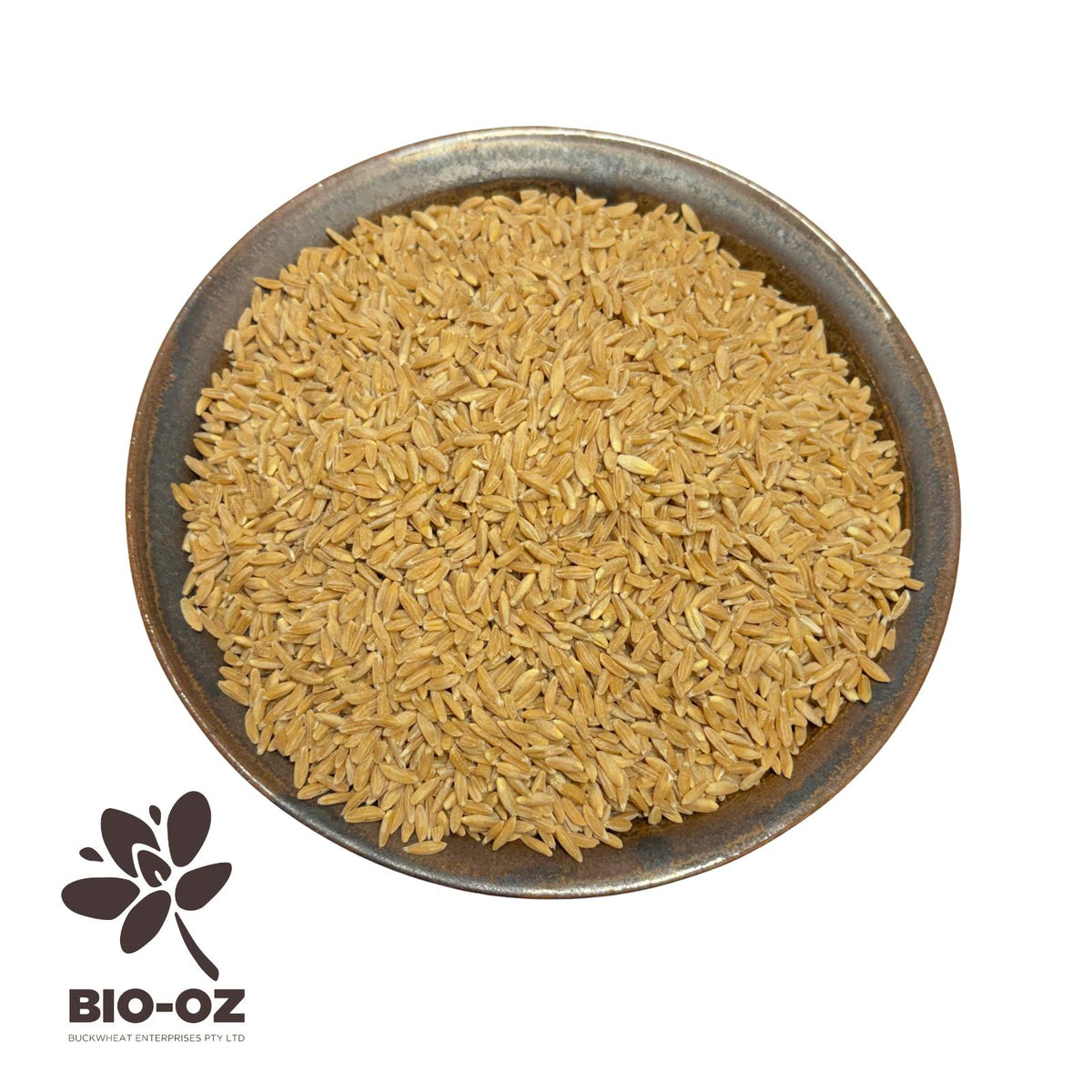
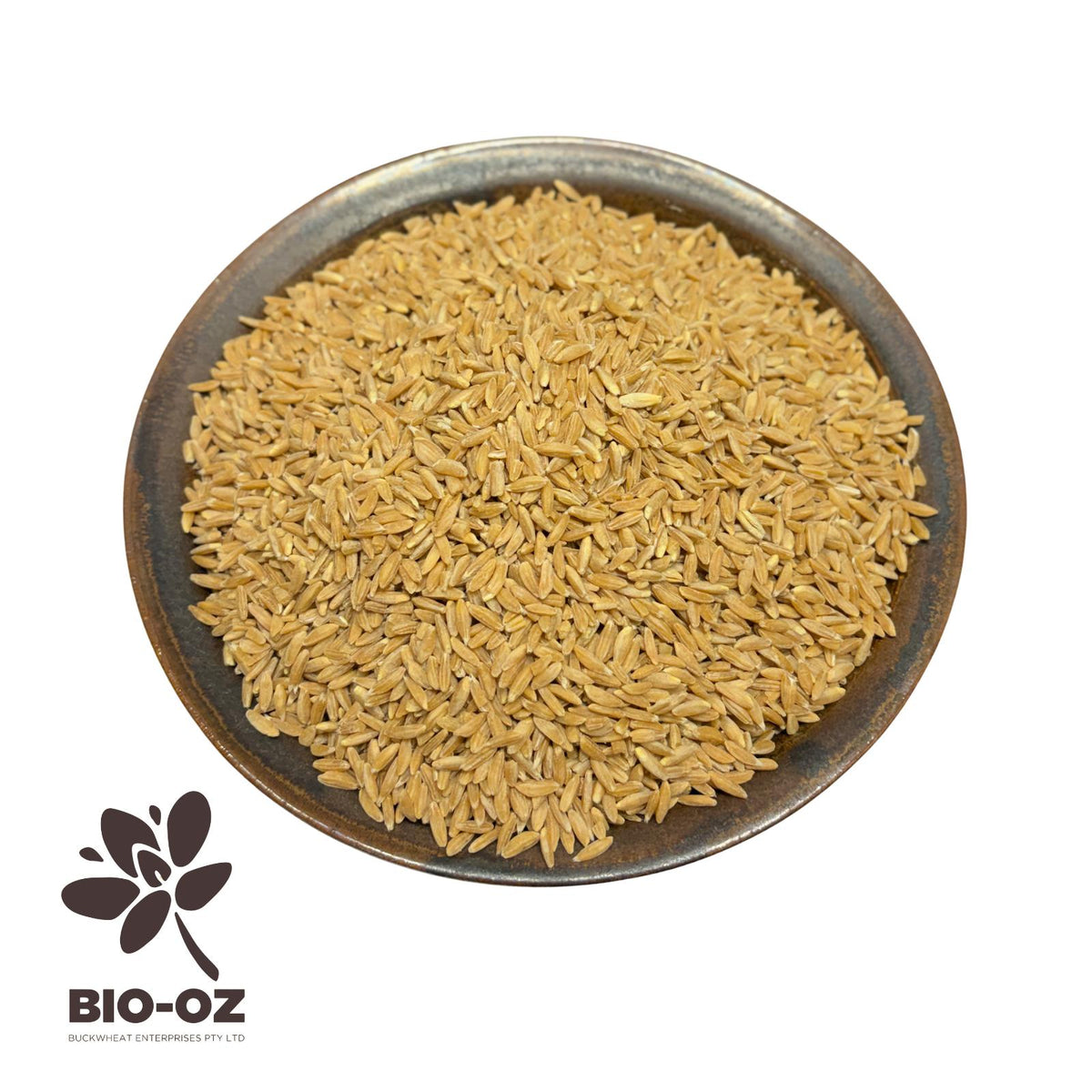
Emmer Grain Chemical Free 5kg
Emmer Grain Chemical Free 5kg
175 in stock
Couldn't load pickup availability
Key Product information
Key Product information
SKU: EMR-GRN-BE-5KG
Barcode: 0721702295722
Produced by: Bio-Oz
Growing Methods:
Grower's Certification:
Packaging information
Dimensions: x x
Gross Weight:
Product description
Emmer is one of the earliest domesticated wheats and a foundational grain in the history of agriculture. Alongside einkorn, it formed part of the first wave of cultivated cereals. Long before modern bread wheat existed, emmer supported early farming societies across the Fertile Crescent and helped shape the genetic and agricultural pathway that led to today’s wheats.
Our emmer grain is grown in Australia by Bio-Oz, a long-standing grain processor and grower network based in western New South Wales. It is selected for flavour, resilience, and suitability to low-input farming systems rather than maximum yield.
About This Grain
Also known as Khapli wheat in India or farro medio in Italy, emmer is a hulled, tetraploid wheat. This means the grain remains enclosed in a protective husk after harvest and requires dehulling before milling or cooking. While this extra processing step makes emmer less suited to industrial agriculture, it reflects the conditions under which it evolved, where resilience, storage stability, and adaptability were prioritised over efficiency.
Compared with modern wheat, emmer typically produces fewer tillers and lower yields, but it performs reliably in poorer soils and under variable climatic conditions. These traits have kept emmer in cultivation in parts of the world where consistency matters more than output.
Why Emmer Grain Is Special
- One of the earliest domesticated wheats, with deep agricultural history
- Hulled grain that retains strong character and flavour
- Naturally resilient in dry and variable growing conditions
- Rich, nutty flavour well suited to wholegrain cooking and milling
- Grown in Australia by Bio-Oz using low-input farming practices
Culinary Use
Emmer is prized for its rich, nutty, and slightly earthy flavour. When cooked as a whole grain, it holds its shape well and develops a satisfying chew, making it well suited to salads, grain bowls, soups, and pilafs.
Once dehulled, emmer can be milled into flour for breads, flatbreads, pasta, and traditional baked goods. Its gluten structure is gentler and less elastic than modern bread wheat, so emmer flour performs best where flavour and texture are prioritised over volume. Many bakers choose to use emmer on its own for dense, flavour-forward loaves, or blend it with stronger wheats for added structure.
FAQs
Is emmer the same as spelt?
No. While both are ancient wheats, emmer and spelt are genetically distinct and behave differently in the kitchen. Emmer is a tetraploid wheat with a gentler gluten structure, while spelt is a hexaploid wheat more closely related to modern bread wheat.
Does emmer contain gluten?
Yes. Emmer contains gluten and is not suitable for people with coeliac disease. While emmer’s gluten structure differs from modern bread wheat and behaves differently in baking, it is still a wheat and should be avoided by anyone who needs to follow a strict gluten-free diet.
What does it mean that emmer is a hulled wheat?
Emmer retains a tight husk around the grain after harvest and must be dehulled before use. This added step reflects traditional farming systems and contributes to emmer’s strong grain character.
Can emmer be milled at home?
Yes. Once dehulled, emmer grain can be milled using home stone or impact mills.
Is emmer suitable for sourdough?
Yes, though it benefits from gentle handling and, in some cases, blending with stronger flours depending on the style of bread you’re making.


- Choosing a selection results in a full page refresh.
- Opens in a new window.